ALKROS COACH
How to build a client meal plan in clear steps
Goals, meal structure, ingredients and review: a practical guide for coaches creating a usable meal plan rather than a scattered recipe list.
Gather constraints before setting goals
Check dietary preferences, reported allergies, available foods and preparation time before choosing recipes. Record what the client can realistically follow. This is a software workflow, not a prescription for calorie intake or a substitute for individual professional advice.
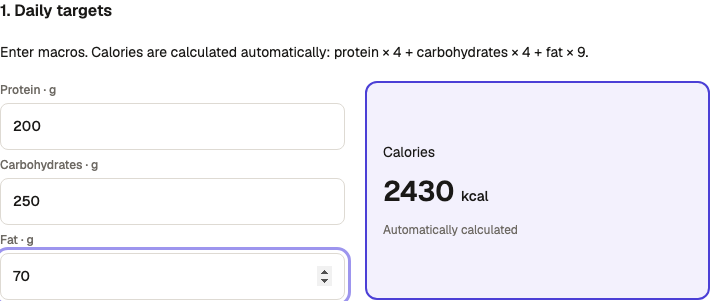
Start with daily targets in the client’s nutrition area. Enter protein, carbohydrates and fat; the calorie summary helps show how the targets relate. A target is separate from the nutrition total of the selected meals. Compare the two at review.
Choose a workable meal structure
Agree on three, four or five meals around the client’s routine. Decide whether meals repeat or days vary. Seven different days are not automatically better: familiar meals may make shopping and preparation easier.
Review each day and meal. A clear name and concrete quantity are more useful than a long description without measurements. When copying a day or applying a template, review the result before saving. A template does not establish suitability for a new client.
Use ingredients with calculation data
Choose reference foods or enter nutrition labels manually. Check units and the reference quantity: values per 100 g differ from values per serving. Check whether a recipe represents one or several portions. Missing nutrition data should not be read as zero.
Replacing a food requires another look at quantities and totals. Similar calories do not establish equal composition or allergy safety. Check actual product labels and the restrictions reported by the client.
Review before assigning
Compare daily totals with targets and check empty meals, quantities and the schedule. Save once the plan is ready. Open it on a phone to check whether the next meal is clear. Use feedback for confirmed changes while preserving previous history.
Example: a repeated breakfast with varied main meals
A client wants four meals, has little morning time and can cook in the evening. Start with a repeated breakfast and vary lunch and dinner across the week. Build one complete day with specific foods and quantities first. Copying an incomplete day simply multiplies its gaps.
After reviewing that day, reuse its structure and change the agreed elements. Recheck quantities and the shopping list: one ingredient change may affect several meals. This illustrates organisation, not a menu or portion prescription for a particular person.
When totals do not match targets
The target is what you agreed; the total is calculated from entered foods and quantities. When they differ, check data before changing portions. An incorrect unit, serving count or product label can cause more discrepancy than the recipe choice itself.
Check the label reference quantity, quantity unit, serving count, ingredients without data and finally the daily total. Manual ingredients need declarations for meaningful calculation. A reference-food estimate may differ from the actual purchased product and should not be presented as laboratory precision.
Explain how to use the plan
When assigning, explain how to read quantities, find the schedule and handle an unavailable ingredient. Avoid saying “replace it with something similar” without explaining the criterion. The client may think of taste, price or calories while you mean something else.
Before the first week, ask whether shopping and preparation are realistic. Afterwards, ask which meal was difficult, which quantity was unclear and which food was unavailable. Use these concrete answers to prepare and review the next version.